Which continent, exactly?

This blog's title isn't in reference to actual continents (I've now been to four), but is rather drawn from "The Third and Final Continent," a stunning short story by Jhumpa Lahiri, from her collection, The Interpreter of Maladies. In particular, I'm inspired by the following quote that summarizes the attitude I try to carry with me through life and on my travels

I am not the only person to seek his fortune far from home, and certainly I am not the first. Still there are times I am bewildered by each mile I have traveled, each meal I have eaten, each person I have known, each room in which I have slept. As ordinary as it all appears, there are times when it is beyond my imagination.

I love this. It calls on us to consider the tiny details of our experiences, both one-by-one, and in the aggregate, and to maintain a sense of wonder even about the seemingly mundane things that are the building blocks of our lives, and often, the glue that binds us to our traveling companions.

This blog began as a chronicle of my study abroad experience in Cairo in Spring 2008, and continued last year while volunteering in Geneva, and South Sudan with a wonderful organization, VIDES.

Now in graduate school, I'm returning to the Continent this summer while interning in New Delhi, India.

Please enjoy, inquire, and learn.

Friday, July 18, 2014

Flipping the Coin: Agra

Before going to the Taj Mahal, I was told by many people that Agra, the town in which it resides, was not a great place.

It’s usually said with the same tone of voice you hear about so many destinations and their contexts. Despite the tolerance and openmindedness universities are supposed to instill, town gown relations inevitably involve diminutive expressions like “townies,” and a whole of buts   The University of Chicago is great....but Hyde Park is dangerous.  Notre Dame is beautiful….but South Bend sucks.  Why does Disney World have to be in Orlando? Visiting the Pyramids would be better if it weren’t for, you know, Egypt…
Tourists checking out the Taj while a
street dog sleeps in the sand

It’s not that there’s nothing to this.  I have exactly 0 desire to live in Orlando. I wouldn’t probably have chosen to live in South Bend or Hyde Park if not for my educational choices.  But I can’t help feeling that there’s always a certain undertone of disdain, for lack of a better word, for local residents that always makes me a little uncomfortable. 

The tourist industry complies with consumer preferences for beauty without a downside. They provide luxury hotels, onsite properties, private transport, and often employ migrant staff from different countries or regions that minimize the amount of interaction seekers of beauty, thrills, and photo-worthy vistas have to have with the population at large.  And the cost of enjoying the attraction are often so prohibitive that neighbors cannot possibly afford to take advantage.

But the divide between destinations and their settings not realistic or genuine.  There is a historical reason why attractions and there environments are as they are; they have evolved in tandem. In some cases, surrounding areas reflect a wider regional social/economic context. In others, I suspect that the competitiveness endemic to the tourism area has driven wages down, even as prices increase, leading to a more impoverished areas that would otherwise exist. 

Photo credit: My roommate
For example, we toured a small workshop where a handful of men carve marble and apply semiprecious stones using the same techniques used to ornament the Taj Mahal. Our guide told us with a weird touch of pride that the craftsman only have 10-15 year careers before their eyesight is lost to years of microscopic semiprecious stone and marble flecks, and their hands to years of minute work and scrapes with grinders.  That didn’t make me appreciate their work more…I found it unsettling to know what it really costs. In the name of honesty, I'll admit I  caved to sales pressure and guilt and bought a couple of very small items, meanwhile unsure of the extent to which I was supporting local craftsmen or supporting their exploitation. 

I’m  impossibly obsessed with seeing and understanding the world as it is. And so, in Agra, I kept my eyes open. It certainly isn’t a pretty town unto itself.  The market areas felt like Juba and the hostels and harassment reminded me of Cairo and Luxor. It’s certainly a microcosm of a lot of India, and a side I don’t see traveling to and from work or touring in New Delhi.  During my less than 24 hours in Agra, I saw some real life alongside all that white marble.


The Yamuna Riverbed
I saw a sad river desperately in need of rain, nomadic herders, small-scale agricultural workers living in grass huts, and from a distance, slums. I saw too-skinny children, malnourished horses, cows and other creatures. I looked away from beggars, giving away a little bit of my humanity but none of my change as I considered whether I would be genuinely helping or hurting them. 

Just a few yards down from the Taj Mahal, I saw from across the river what I am 90% sure was a series of funeral pyres on which Hindus were being ritually cremated before, probably, being scattered in the river. I saw a body, wrapped in a sheet being carried towards the river on a stretcher, presumably for the same end.  In short, I saw, but couldn't  hope to understand or engage with people living some of the more difficult pieces of life in the shadow of one of the most-visited, most beautiful attractions in the world.


In my effort to understand, it's tempting to get caught up in pity, romanticism, or other false projections of my preconceptions onto what I saw....I've already done that enough. But I keep reminding myself that I only had a brief glance into a window into others' lives. No more.  What I saw does (and should) provide a little more food for thought as to my place in India and how my choices might affect others, although few good answers.

Earlier, I had a chance to visit the national museum to Gandhi.  His talisman is fitting for life on both sides of the coin. It doesn’t provide much ease but does give a bit of aspirational clarity.


Wednesday, July 16, 2014

Educating India

Dear Reader,

Take a minute, and imagine education in India.

Have that image in your head? Not the stereotypical Indian-educated engineer.  I mean, students who are currently being educated in India.   If it’s anything like mine before I got here, it looks approximately like this:

Photo borrowed from the ASER Flickr, featuring studentsin Bihar state in Northeastern
India  (I'll be doing some data analysis from the project depicted here)
Adorable children learning in  a ramshackle school building    If this was  what you were thinking of, you’re mostly right.

Except for the learning part.

India is building more schools in far-flung areas and enrolling more students, but is not doing an effective job of educating them.

Pratham English Assessment
My internship this summer is with the ASER Centre, that adopts the revolutionary approach (for India) of measuring education in terms of the desired outcome: learning, rather than the inputs, such as the number of students in school or the schools built. They use a pretty sophisticated survey sampling method, go to households in rural villages across the country, and conduct a deceptively simple oral test in the student’s native language.  Examiners see if they can identify letters and numbers, read words, perform simple calculations, and read simple texts designed for a second grader.   I’ll write a lot more about this later, but the data they collect is sobering. For example, they found that "among Std. V (5th Grade) children enrolled in government schools, the percentage of children able to read Std. II level text (such as the left panel above) decreased from 50.3% (2009) to 43.8% (2011) to 41.1% (2013)"

So if you're reading this now, you should probably thank a teacher, and also reflect on the fact that if you were a public elementary school student in India, you probably couldn't.

Government School
Why?  There are a number of reasons.  The big one, cited by each of the several reports I've read and abundant testimony from field visits, is the utter ineffectiveness of the government-run schools. Teachers often just don’t show up, for no apparent reason.  When they do show up, they don't often teach.  When they do actually teach, they follow standard syllabi and rush through textbooks with limited to no individual assessment or attention.  ASER’s parent organization, Pratham Education Foundation and other organizations are trying  to work to fix that, but there’s so much more to be done.  I visited a government school for girls today in New Delhi, where 1 out 3 classrooms, as far as I could tell, had teachers in them.  Students still stayed at school, did their best to learn on their own and work in their exercise books, but self-study is not going to be very effective if basic literacy and numeracy skills are not already in place.  Families are increasingly spending their meager resources on private tutoring, but that isn’t going to be enough to meet the learning deficit in a growing population.

Yet the government still puts out reports evaluating schools by inputs and pat themselves on the back for doing a great job on education. I am saddened by the missed opportunities to teach the children who seem to want to learn so dearly, and happy to spend my summer supporting the work of an organization that’s trying to do something to remedy things.

A Pratham Learning Center (for elementary students) I had a chance to visit.  Since girls usually attend school in the mornings and boys usually go in the afternoons, Pratham offers free education programs focusing on math and reading for each gender during the off-hours.


A free Pratham preschool program teacher


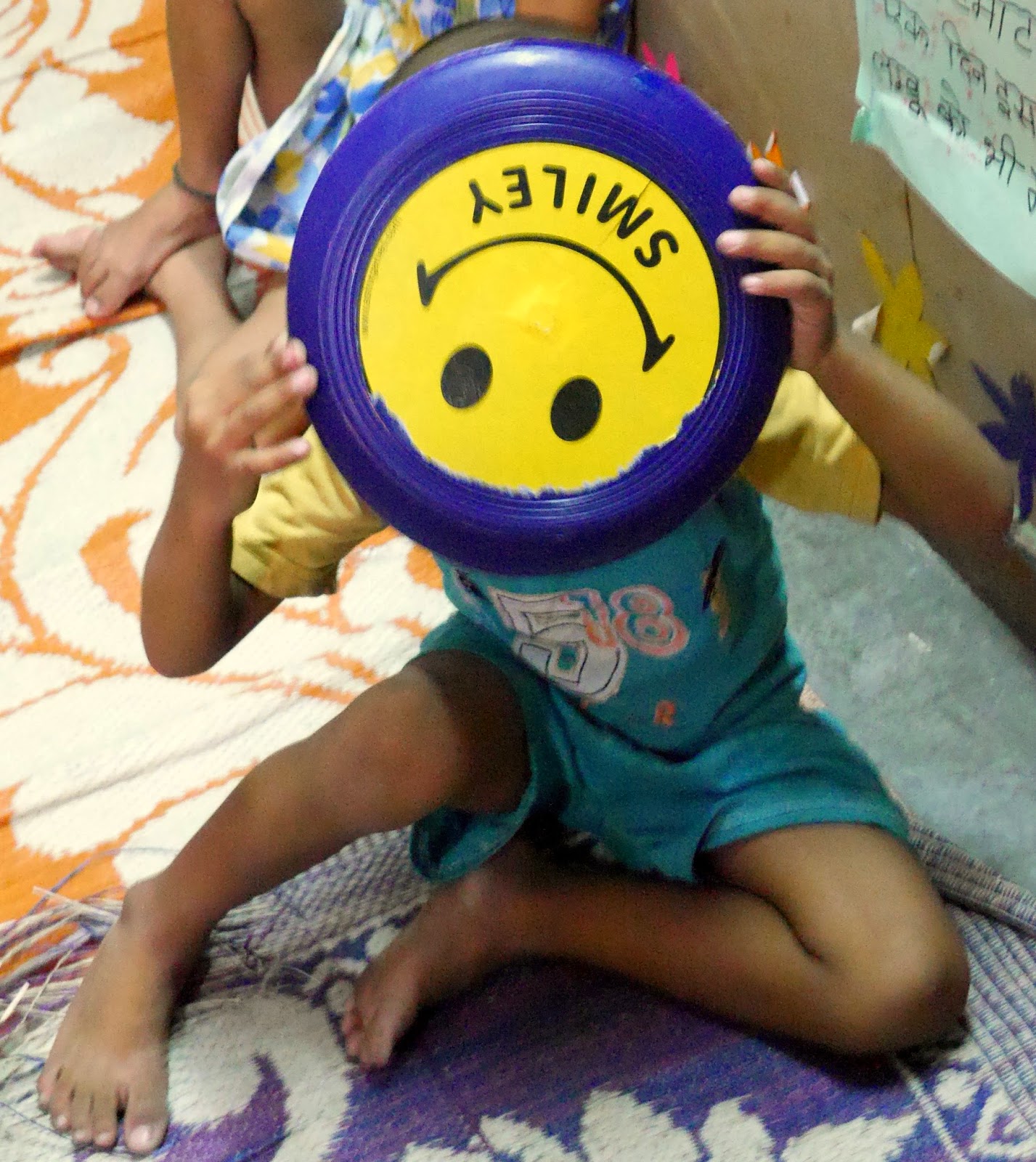
Typical preschool reaction to seeing a camera. He quickly fixed it, but I like this one better.  Like a good teacher, I wanted to end this on a good note. 


Thanks for reading. Comments, questions? Leave it below!

All the best,
Me


Further Reading (as recommended by my outstanding colleagues here):


Monday, July 14, 2014

Delhi's Most Dangerous Game

Case in Point 1
Back in the ancient history of  this blog (2008!), I wrote about the challenges of navigating the traffic of Cairo, describing it as “controlled chaos”.  It wasn’t easy, but I figured it out, and survived unscathed. New Delhi offers a whole other set of problems. You see, in Cairo, traffic was almost exclusively cars that more or less progress by creating and following the maximum number of lanes the road will allow.

Auto-rickshaw (an auto for short), for those not familiar
But in New Delhi, it’s a pretty random mix of cars, motorcycles, the occasional bicycle rickshaws or animal-drawn vehicle, and auto-rickshaws (see picture), all of which have slightly different widths. Moreover, every car has a slightly different trajectory and driving style. Consequently the “lanes” are neither uniform nor predictable.  

For example, the same non-major street could accommodate any of the following combinations in one direction, more if someone's trying to make a risky pass: 
  • 1 truck or bus
  • 2 auto-rickshaws
  • 1 car and 2 motorcycles
  • 1 car and 2 motorbikes
  • 1 auto-rickshaw and 1 bicycle rickshaw
….you get the idea.   Main roads are the same, but faster, wider, and almost never include bicycle rickshaws.

Case in Point 2
Like Cairo, drivers seem to make it work. I’ve seen no accidents, and all the vehicles I’ve been in have only almost hit things…such as other cars, the street dogs here that seem to all have a death wish, and one time this weekend in Agra, a herd of domestic water buffaloes.  Overall, it seems to be kind of well-functioning chaos, if well-functioning is defined as having a common set of rules, making the most of limited road space, and getting from A to B. 

But a pedestrian, where sidewalks are few and far between outside tourist-laden areas, you have to be on your guard at all times.  Every minute.    The space you’re currently walking in is also a space where a motorcycle is happy to zoom by, or might make the difference between fitting one auto and two.  If they need the space, they’ll let you know that they’re coming with a honk or several, and you’d better make way…or else (what, I fortunately haven’t had to find out yet). Honking is not exclusively an expression of anger, warning, or frustration, but an important way of communication that facilitates sharing the roads, especially when mirrors aren't really used.

As an American, all the honking in my general direction unnervingly grates on me, but I’ve tried to reprogram my thinking to hear the horns as something like, “Dear Laura: just so you know, I’m coming up behind you, just trying to get from point A or point B as quickly as possible.  I don't want to hit you, so I advise you to pay attention, get off the road if you can and remember that I pack a bigger punch than you do”  It's not really working, but for the sake of sanity, I'm still trying

If walking in Cairo was like playing a game of Frogger, I would call Delhi traffic Tetris where the pieces you don’t control move both up and down and side to side.  A game I would not choose to play with my life and limbs, if it wasn’t an occupational hazard of spending my summer here. 

Variations on a Theme: The Case of Agra

India, at long last

Hello to my exceedingly small army of loyal fans…Your continental correspondent is officially in, and after years of waiting and dreaming of being here, reporting from the first literal continent of this blog's literary namesake.

[Side note]If you still haven't read "The Third and Final Continent," you really should.. I've read it a dozen times at least, but I still found it really moving this morning, and it wasn't just my sleep deprivation.  It offered a new resonance light of my first formal, awkward interactions with my landlady in India and a couple of cornflakes dinners when I was still getting settled

I’m well overdue to post my first entry from the (sub)Continent. I’m sorry… on top of interning 8+ hours each day, and spending a good chunk of the rest commuting, cooking, cleaning and sightseeing, I’ve gone on a much-needed reading binge and then, it’s taken me a while to gather my thoughts on this place enough to share with a wider audience.

Here are a few random things to kick this off:

Weather.  It’s hot. It’s REALLY hot.  And it’s not supposed to be like this. New Delhi’s been a bit in limbo since I got here, since before I got here they've been waiting on the monsoon rains We need the rain for a number of reasons: to water the crops to feed India’s over a billion people. to break the 100+ heat wave that makes going out during the day unpleasant, if not  unbearable, to set the rivers running again. The monsoons arrive in different parts of India at different times. Other parts are getting the rain, albeit below average due to, they claim, El Nino and other mystery factors.. But New Delhi, and other parts of the North are waiting on the deferred downpour.

[UPDATE] Just a couple hours ago, the rain began.  It’s cool, and delightful, and  though the puddles and mud patches make navigating tricky, for now, I love it.  Just mon-soon enough

The Jami Masjid (historick mosque) at sunset, which I toured in soul-numbing heat.. Not ideal, but I also realize I need to make the most of my limited time here.  So I hydrate well, take frequent breaks in air-conditioned shopping locales, and tour on. 
Cows: Yes, they’re everywhere, just wandering around.  No one will kill them, because they're sacred in Hinduism, but no one also really takes care of them.  They just hang out and eat trash.  It's a bit comical, but mostly just sad.

Food: I’ll need to write an entry or several just on this, but as a quick summary, my roommates (who intern at the same place) and I tend to cook dinner at home on weekdays, order in some kind of Indian/Indian Chinese (which is different both from Chinese Chinese and American Chinese) to the office for lunch, and explore real restaurants on the weekends.  All delicious, usually vegetarian (occasionally chicken, basically never beef), always an adventure.  I’ve checked out a few American chains (Dominoes and KFC in moments of hunger/weakness, and have been impressed on how they’ve adapted their menus to the vegetarian Indian spice-loving palate.

Delicious roommate dinner: stuffed peppers with rice and
chickpeas
Fun fact: the Dominoes’ employee of the month is known as the service guru.  Because, India.

Sunday, June 22, 2014

Travel-Weary, Travel-Ready

I perpetually seem to underestimate the amount of time, effort, and energy it takes to get ready for a trip, and  now, being a little more seasoned (read: older) than I once was, I am both more prepared, and more worn-down by the prep. Most of my international travel to date, with the exception of Panama a few years ago, has been medium-termstints of living abroad, rather than short trips, and I definitely prefer to experience the world that way.

But prepping for a long trip is EXHAUSTING.  I have to acquire a culturally appropriate wardrobe, get vaccines, stock up on  drugs and prevention for the ailments that will inevitably come, make arrangements for my mail and my bills, acquire visas (Getting an Indian visa was infuriating, and I'll leave it at that), perform feats of strength while repeatedly weighing my luggage to get it under 50 lbs, say goodbyes. Etcetera.  And so on.

Sorry, apparently the rant that was supposed to be a lead-in to the real point of this post got a little out of hand.  The refrain running through my head is not "I hate traveling," but the asked-and-answered question, "Why do I do this to myself?" "Because I love it.  I love every minute." Not that there aren't  many minutes in there of stress, exhaustion, anxiety, awkwardness, discomfort; there are truckloads, and I don't always feel the love.  But I love that each minute is a minute I'm choosing to be wherever I am, rather than resorting to my default geography. It's mine to enjoy, to suffer, to make mistakes, to learn from them.

I recently watched The Secret Life of Walter Mitty, and though it got mediocre reviews, I kind of loved it.  In one scene where the title character is meticulously balancing his checkbook from a Papa John's in in Iceland, I noticed that he had logged his passport photo prints and expedited passport fees, at a cost of $400.   In my current state of flux, I  genuinely appreciated that they didn't just pretend a man who has only been to Phoenix magically has a valid passport. But they also didn't bother to film a scene where he went to apply for an expedited passport. Because that's not what was important. It's just what had to happen (and be paid for) to get to the important stuff. Getting a visa and buying a bunch of shit isn't a story, it's just an inconvenience that gets you to a story.


This summer, have an incredible opportunity to work in my target field while living in a country I've dreamed about for years. It's been hectic and crazy to get ready. Like every time I go through this, I keep promising myself that I'll someday stop living like a vagabond.  But I never do. I know deep down that I have to get through this ritual in order for this summer's story to begin. And that I'll probably love every minute.

---

PS: If you have a couple hours and a nearby Redbox, check out Walter Mitty. It's a good way to get you geared up for upcoming travels or spending some serious time on Kayak finding somewhere to go.

Friday, June 20, 2014

Map!

So I got bored last year in Geneva and created a map of everywhere I've ever been or lived.

Blue: Places I have lived for more than a month
Red: Places in the US I can remember visiting
Yellow: International places I've visited.

It's been a crazy, beautiful last few years.  I hadn't actually left the country until I set out for Cairo in 2008, and then I didn't know exactly what I was getting myself into. I still don't.

And here we go again. Looking forward to adding India to the map very soon. Very soon.


View Laura's Life Map in a larger map

Sunday, August 18, 2013

An unpredictable bubble

There is no experience quite like finding the country you currently reside in in the lineup on the international news, where the number of positive stories per week usually fit on one hand.   Geneva made waves while I was there with some rather inflammatory comments from a North Korean speaking at a disarmament conference.  My reaction was along the lines of, “Ooh, diplo-drama down the street.  That’s kinda cool.”

In a developing country, and one less stable than Switzerland (as almost all countries are), we usually make the news for different types of news.

Here, I’ve had that er, pleasure twice in the last couple months (that I know of).  A few weeks ago, Al Jazeera’s nightly news alerted us to conflict between South Sudan and the Sudan over oil. . . in short, the Sudan accused South Sudan of supporting separatist rebels in Darfur, and gave them 30 days to cease the support or have the oil piplines cut off (all the oil wealth of the South has to go through the North).  At which point the South threatened to stop the oil production the North depends on.  So we got to see Juba lit up on a bright red map.  I haven’t had the chance to research it thoroughly to figure out the truth of the matter, and when it comes to politics, truth is second to posturing and gain.  All I know is that negotiations are still ongoing, but the urgency of the situation has dissipated.

More recently, mixed up with nearly constant coverage of Cairo (where I’ll be in just a few days), this baby country has made news with a substantial political shakeup, as the Vice Preisdent and Cabinet have been dismissed by the President.   We’ve heard that more police have been deployed, government offices and some stores have been closed, foreigners have been advised to keep a low profile.  The word on the street has called it an anti-corruption measure. Foreign nalysts have mostly pegged it as an effort by President Kiir to challenge those in his party (the dominant party, the SPLM) who have expressed interest in challenging him in the next election. Again, the truth is less important on the ground than people’s views and reactions to the situation.

What’s interesting is how little this affects my day-to-day life.  I, the sisters, many/most of the teachers, and most of the students stay within the walking distance, so at school it’s business as usual.  Those coming from outside have faced some difficulties getting here with the shutdown, but have always made it here. Without TV or internet, people in the village can remain unaware of international issues like the oil conflict, and know only limited or rumoured information, such as what is heard on the radio, about the more local events of the past few days.

So once again, I’ve found myself in a bubble, made partially of living in a compound with nuns, and partially of living and working among a decentralized, community with limited communication technology.  A bubble where there’s no such thing as a typical day, business as usual when the usual business means unpredictable tasks, responsibilities, and challenges.   I try to stay aware of the political issues that are happening just barely outside the bubble because that’s who I am, but it doesn’t change much of anything of how I serve them.  Political unrest or not, I still get up to face the day, just maybe with a little extra prayer for peace and unity thrown in for good measure.  

Later on:

I had this experience a third time on my journey home, when I saw coverage of protests in Cairo. Egyptair offers free hotels to those with overnight layovers, and so, from a luxury style hotel in Cairo, where, if I had had my head under a large rock, and hadn't turned on the TV at all, I could have gone the entire 16 hours on the ground without knowing that the country is currently in a state of . . . serious conflict.   More on the stopover in Cairo later, but in short, it was 16 hours of serious bubble time.